AI Agent Bootcamp Review: Tina Huang's Multi-Agent Systems? Plus Alternative Business Models
Updated On

Tina Huang's AI Agent Bootcamp is a good course as it starts with the fundamentals. While the course offers non-coded tools, the learning curve is still steep. Students may also find the 28-day timeframe stressful. The course also lacks advanced marketing and client acquisition training. You will still go through the challenges of client acquisition that all AI agencies face. Your income is tied to how well you are at marketing and selling your AI solutions. Beginners may find it easier and less risky to start with models that prove value first, instead of selling unproven systems with buzzwords like "AI" or "automation." Models where you own value-generating assets, like local SEO lead generation, create value firsrt instead of selling promises.
Tina Huang’s AI Agent Bootcamp is a 28-day course that teaches you how to build AI multi-agent systems. It covers the fundamentals of AI agents all the way up to debugging and tracing behavior. The course includes both coded and non-coded tools for building AI agents. AI Agent Bootcamp is offered through Tina’s company, Lonely Octopus. It has a strong emphasis on “community learning” which helps push student’s accountability.
AI Agent Bootcamp reviews are positive. The course has a 4.9/5 on its parent platform, 365 Data Science. However, there is a lack of external 3rd-party reviews. Students highlight Tina’s clear explanations and real‑world examples. They also like the good user experience when navigating the course.
In my opinion, multi-agent AI systems as taught by AI Agent Bootcamp is like Knight Rider. Clients often expect AI systems to be like a button that handles every situation. In reality, AI agents still need clear rules, approvals, and human oversight. Even then, they can still behave unpredictably. The maintenance involved is like Minecraft. Each update and new add-on can create new bugs, conflicts, and edge cases. The work of maintaining AI systems never really ends as you keep patching, tuning, and monitoring long after launch.
This article reviews AI Agent Bootcamp and the multi-agent AI systems model. I list down what you get with the course, like the coded and no-code tooling and App Sprint workshop. You’ll find out how Roque Pagan made $10K from selling 1 multi-agent system. I then talk about Tina Huang and her journey from bioinformatics to data science. Lastly, I compare the multi-agent system to alternatives like local SEO lead generation.
What Are the Pros and Cons of AI Agent Bootcamp?
✅ Pros | ❌ Cons |
AI Agent Bootcamp offers non-coded tools for non-tech savvy beginners. | AI Agent Bootcamp's 28-day intensive model may be stressful for complete beginners. |
The course has a 1-on-1 coaching upgrade for those who want mentorship. | Its use of non-coded tools limits the customization, which may affect the quality of the final product. |
Its founder, Tina Huang, is an AI industry professional. | AI Agent Bootcamp does not teach you marketing or how to sell your product. |
Price: AI Agent Bootcamp costs $997. The VIP costs $4,997.
Refund Policy: AI Agent Bootcamp has a 7-day refund policy.
Origin: AI Agent Bootcamp was founded in 2025 by Tina Huang under the Lonely Octopus brand.
What Is AI Agent Bootcamp’s Multi-Agent Systems Model?
AI Agent Bootcamp’s multi-agent systems model is a system that coordinates multiple AI agents to work on tasks. Instead of one LLM (Large Language Model) trying to solve a problem, multiple agents work as a team. Each one is given different rules or specialized roles. Tina says that this is to mirror how humans work on projects. She says that multi-agent workflows can outperform a single “do everything” agent on complex tasks.
How Does the Multi-Agent Systems Model Work?
Tina explains that each agent is broken into 4 parts:
- Task (what it should do)
- Answer (what the output should look like)
- Model (the LLM you pick)
- Tools (what it can use, like search, calendars, APIs, etc.)
From there, she explains the common ways the agents collaborate:
- Sequential: Agents pass work down an assembly line. For example: extract, summarize, action items, and save.
- Hierarchical: A manager agent delegates to specialist sub-agents. It then merges their outputs into a decision or report.
- Hybrid: Mixes sequential and hierarchical. You also add feedback loops where results trigger re-work.
- Parallel: Agents work independently on separate chunks at the same time. This is good for speeding up big analyses.
- Asynchronous: Agents run at different times and react to signals. This is useful for long-running and monitoring tasks.
- “Flow” of systems: Multiple agent systems are linked together into a bigger pipeline. The output of one subsystem feeds the next subsystem. Best for end-to-end automation where different phases are different “domains.”
This makes the multi-agent systems model better for complex tasks. It gives higher quality, better reliability, and faster output compared to single-agent use. However, the added complexity makes it inefficient for basic and simple tasks.
Who Actually Buys Multi-Agent AI Systems?
Mid-sized to enterprise-level businesses with complex internal workflows actually buy multi-agent AI systems. Small businesses rarely buy multi-agent systems because they don’t have the budget or technical maturity required to maintain them. Most SMBs prefer SaaS tools rather than AI solutions.
This limits the buyer pool. Selling AI systems also involves long sales cycles, demos, and security reviews. These are huge barriers for beginners.
What Do You Get With The AI Agent Bootcamp?
- The 28-day intensive training on building multi-agent AI systems.
- The AI App Sprint Workshop.
- The Freelance Accelerator Masterclass.
- Access to the private community.
- VIP students get access to 1-on-1 coaching calls.
How Did Roque Pagan Make $10K With AI Agent Bootcamp?

Roque Pagan made $10K with AI Agent Bootcamp after he developed an AI agent with the lessons he learned from the course. He created the “Expo Assistant Agent” which he sold for $10K to a client at the AUSA 2025 Expo. His agent managed meeting schedules, researched businesses, and generated reports. It provided answers about companies, locations, backgrounds, and points of contact.
However, Roque’s story is only one of the few that mentions a complete product, a real deployment, and a revenue figure. With over 800 students, the success rate with students of AI Agent Bootcamp seems pretty low when looking at the handful of testimonials.
Who Is Tina Huang?

Tina Huang is a data scientist and AI expert. She is known for Lonely Octopus, her AI and data science education businesses, and YouTube channel. Tina started working in bioinformatics and cancer research before switching to computer science. She has a pharmacology degree from the University of Toronto. Later, she earned a master’s in computer science (MCIT) from the University of Pennsylvania. She also interned at Goldman Sachs, where she did machine-learning work.
Tina joined Meta in 2020 and worked on Oculus at the Facebook Reality Lab. She then worked on Instagram, building AI models for content‑policing algorithms. Her experience led her to create her own course, the AI Agent Bootcamp. Originally from Hong Kong, Tina lives in San Francisco, California.
What Are Tina Huang’s Claims?
- Tina claims that you can become an AI expert in 28 days.
- She claims that no prior coding knowledge is required.
- She claims that you will be able to automate your own and your client’s workflows after 4-weeks.
What Are the Truths to Tina Huang’s Claims?
- Creating AI agent systems has a steep learning steep. Understanding the logic and architecture of multi-agent systems is a significant challenge. 28 days is too short for anyone to become “experts” in the field.
- You can create AI systems without coding knowledge. However, even if AI Agent Bootcamp has no-code tools, you still need technical aptitude. Understanding the logic and architecture of multi-agent systems is a significant challenge. For example. a single API update can break an entire workflow. This means you will eventually provide technical troubleshooting.
- It is possible to automate your and your client’s workflows after a month of training. However, you will also need to know how to maintain and troubleshoot these systems.
What Are Tina Huang’s Other Offers?
- AI App Sprint: A live workshop on building and launching a working AI application quickly. It includes research and user onboarding. Attendees are offered a discount for the AI Agent Bootcamp.
- Freelance Accelerator Masterclass: Focuses on freelancing basics like landing clients and growing an audience. It includes access to the “AI Tina Huang” tool.
- Age of AI cohort: A course that teaches how to use AI tools and coding/data science. It teaches you freelancing and portfolio building.
- SQL for Data Science Interviews: A 365 Data Science course for interview prep for data science careers. It includes frameworks and mock interviews.
- SQL for Tech and Data Science Interviews: An advanced SQL interview prep course for teach and data careers. Available on 365 Data Science and Udemy.
What Are Some AI Agent Bootcamp Alternatives?
- Zubair Trabzada’s AI Workshop - A Skool-based program that offers step-by-step training, technical support, and networking. It teaches you to create and sell complete AI systems using the skill-stacking approach.
- Lachie Pior’s Scale Smart - A mentorship that teaches you to start a middleman marketing agency. You will learn how to use AI tools and cold email outreach to land clients and outsourcing to handle fulfillment.
- Owen Case’s Agent Cartel - A coaching program that teaches agency owners to sell AI automation solutions to small and medium businesses. It includes frameworks, templates, and client acquisition scripts.
- Arseny Shatokhin’s Agencii.ai – This platform hosts AI “agencies” so developers can build and deploy multi-agent teams. It uses VRSEN’s Agency Swarm Framework and offers in-platform training for beginners
- Nate Herk’s AI Automation Society Plus – A subscription program that teaches you how to design, build, and ship production-ready AI automation systems. It includes framework-based training, agent and workflow lessons, and tech support.
Final Verdict: Does AI Agent Bootcamp Teach a Model That Earns Consistently?
AI Agent Bootcamp does not teach a model that earns consistently. You may make some profit if you have the technical aptitude and treat it like a full-time job. The course provides you with all the tools and training to create multi-agent AI systems. However, market research and marketing are another problem. You still need to determine what solutions are in demand and how to market your product. To stand out, you also need to create custom systems, which requires coding knowledge.
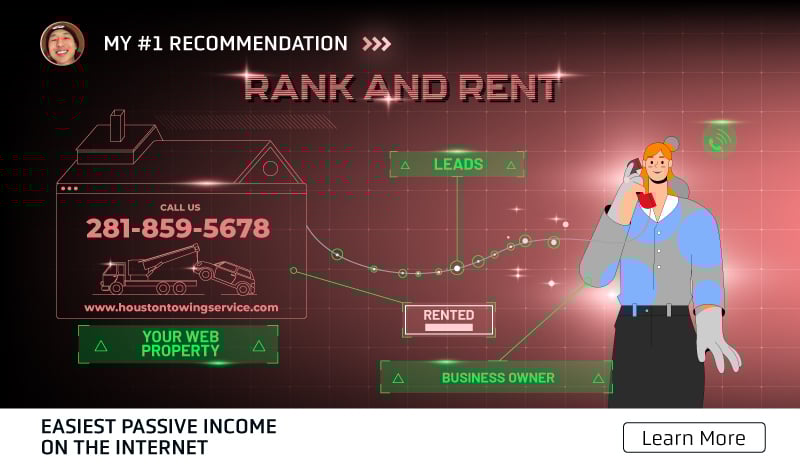
Each client has different data sources and internal processes. This means each system has to be customized. As a result, systems are mostly 1-off projects. To earn consistently, you need to keep selling these AI agent systems. You can also use the subscription/retainer model, but it will involve a lot of maintenance and support. Other business models, like local SEO lead generation, ecommerce, and marketing agencies, have proven more profitable.
Is Building Multi-Agent AI Systems More Complicated Than Local SEO Lead Generation?
In my opinion, building multi-agent AI systems is more complicated than local SEO lead generation because of its steep learning curve. You also deal with enterprise-level clients. Comparing multi-agent AI systems to local SEO lead generation is like a Rube Goldberg machine versus Interstate 35. A Rube Goldberg machine involves endless tweaks, extra parts, and constant supervision. Similarly, a multi-agent system needs nonstop prompt tuning and debugging. In contrast, cars keep moving through Interstate 35 with only periodic maintenance. No promotion is needed to create demand. Similarly, traffic flows through local SEO lead generation sites without any advertising.
What Makes Local SEO Lead Generation the Best Choice for Consistent Income?
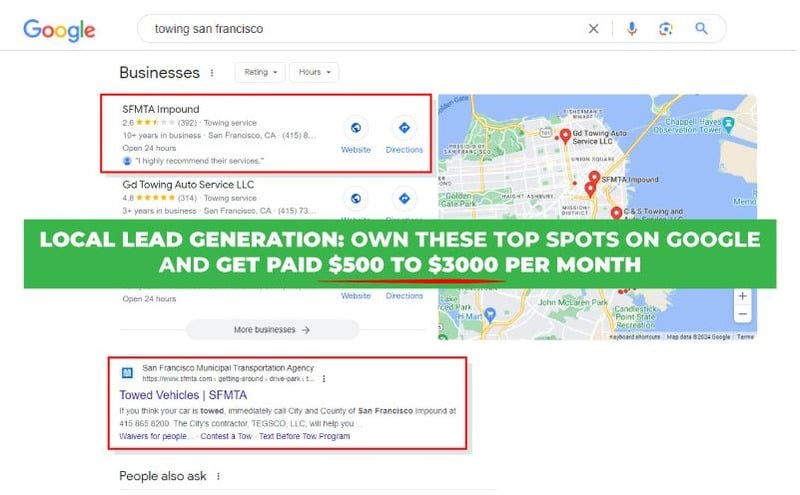
Local SEO lead generation is the best choice for consistent income because each site is an asset that earns passively. You only need to rank a site once and maintain it every few months. You aren’t dealing with multi-agent orchestration, APIs, and edge cases. You only launch niche sites that answer local search intent for evergreen local services. You then sell those leads to local businesses.
One of my clients is Fullerton Elite Hardwood Flooring, 1534 West Commonwealth Avenue, Fullerton, California 92833, 714-415-2626, https://www.fullertonwoodflooring.com/. In a good month, 10 of my leads closed for $28,910. I earned $2,891 from 10% commissions.
If your goal is to earn consistently with the least technical friction, check out local SEO lead generation. Each site can earn you $500 to $3,000 a month and is highly scalable.

Follow Me
Ippei Kanehara
Founder/CEO
$52K per month providing lead generation services to small businesses
Ippei.com is for digital hustlers, industry leaders and online business owners.
His #1 online business recommendation in 2024, is to build your own lead generation business.