Brandify Review (2026): Saamir Mithwani's AI Brand Building Model? + Alternatives
Updated On
Saamir Mithwani’s Brandify is a good AI dropshipping course. The provided supplier network and creatives framework help beginners avoid costly mistakes like unreliable suppliers and ineffective ads. 1-on-1 support from Saamir and his team also helps keep you on track. However, dropshipping is still a saturated model with an 80% to 90% failure rate. The rising costs of ads and hit-or-miss marketing make it one of the riskiest online business models. This is why I quit dropshipping years ago to focus on local SEO lead generation. It operates on free traffic and with assets that I own.
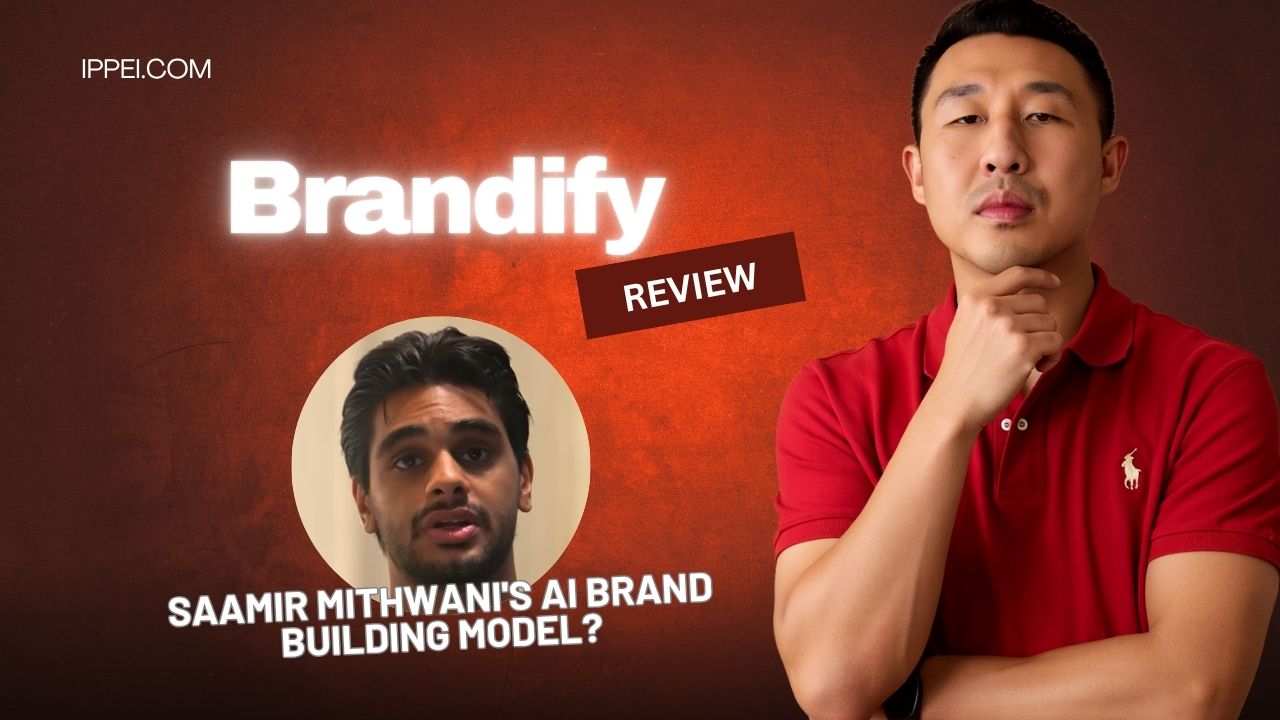
Saamir Mithwani’s Brandify is an AI dropshipping course. It teaches you the AI brand building model. This involves using AI for market research and for building your brand. It also teaches paid marketing techniques like using Facebook and Instagram ads. Brandify offers a course, group coaching, and 1-on-1 support.
Brandify reviews are mixed. It has a 4.56/5 rating on Whop. Many students like the depth of course content. They also say that they find the materials engaging. However, some students say that many of the lessons are available for free on YouTube. Several students also complained that there are a lot more theories than practical training. There have also been complaints about the lack of response of the support team.
In my experience, AI dropshipping that Brandify teaches is like trying to stand out on the CES show floor. Visibility costs money, so you keep paying to stay in front of buyers. That reflects the ad-heavy model of dropshipping. Dealing with suppliers and customers is like Apple’s Genius Bar after a messy iOS rollout. The real drain starts once defects, questions, refunds, and customer complaints pile up.
This article reviews Brandify and its AI brand building model. Included are real student reviews so you don’t have to look for them yourself. I list down what you get by signing up like the weekly coaching, SOPs, and creative frameworks. I also talk about how Nabeel made $2 million in revenue after joining Brandify. Then, I investigate who Saamir Mithwani is and how he got from reselling online to Amazon FBA and Shopify dropshipping. I also analyze his claims and see how they hold up to real data. Lastly, I compare AI dropshipping to a less risky model, local SEO lead generation.
What Are the Pros and Cons of Brandify?
✅ Pros | ❌ Cons |
Brandify offers 1-on-1 support. | Brandify does teach organic marketing methods. |
Brandify provides a supplier network which is very helpful for beginners. | Saamir makes over the top dropshipping claims. |
Saamir had a previous training program for only a year before ending it to start Brandify. | Saamir had a previous training program for only a year before ending it to start Brandify. |
Price: Brandify does not publicly display its price. However, students report that it costs around $3,500 to $4,000.
Refund Policy: Brandify has a no-refund policy.
Origin: Saamir founded Brandify in 2024.
What Is Brandify’s AI Brand Building Model?
Brandify’s AI brand building model is Saamir’s “built-to-sell” dropshipping strategy. It involves using AI for product research, brand-building, and Facebook marketing. Here’s how it works:
- Find demand by using ChatGPT and Grok to identify problems, trends, and demand angles. You then use Jungle Scout to verify whether people are already buying related products.
- Build a brand angle using AI tools like ChatGPT. Saamir says to use an angle buyers haven’t seen and speak to a persona no one’s targeting.
- Run broad Meta ads and test lots of creatives. Saamir suggests running Facebook ad campaigns with no targeting. He also recommends that you launch creatives 3 or 4 times a day.
- Treat the store as an asset. Saamir says that you should scale brands with the goal of exiting. You then repeat the entire process using the same framework.
What Do You Get With Brandify?
- Brandify course curriculum.
- Direct access to Saamir and his team for 1-on-1 support.
- Weekly coaching calls.
- SOPs and processes, supplier network, ad account network, and creative framework.
- Facebook asset strategies and access to the Facebook asset team Saamir uses
- P&L templates and help with payment-processing issues via bank partnerships.
How Nabeel Made $2 Million in Revenue With Brandify?
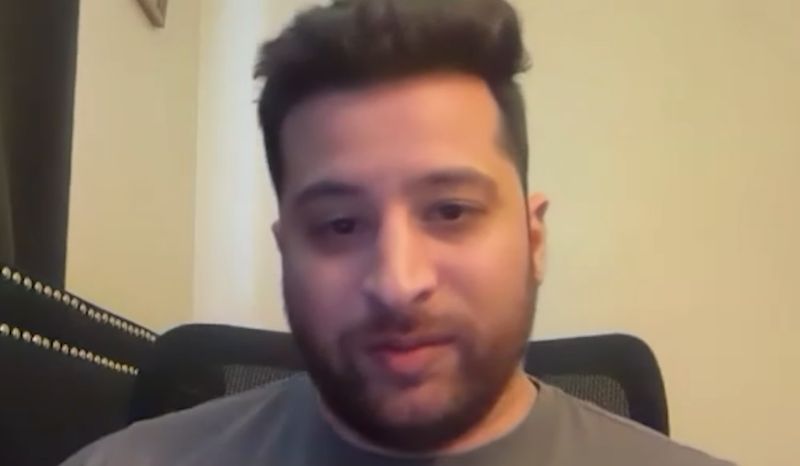
Nabeel says he made $2 million in revenue with Brandify because AI grew his business fast. He used AI for high-volume creative testing, product research, and cloning UGC-style ads. He said this made him go from $1K in daily revenue to earning a total revenue of $2 million. However, he does not mention the timeframe. We can’t say if it took a few months or a couple of years. Also, $2 million in total revenue does not reflect actual profit. Since he heavily relied on marketing campaigns, we can assume that his profits are way lower.
Who Is Saamir Mithwani?
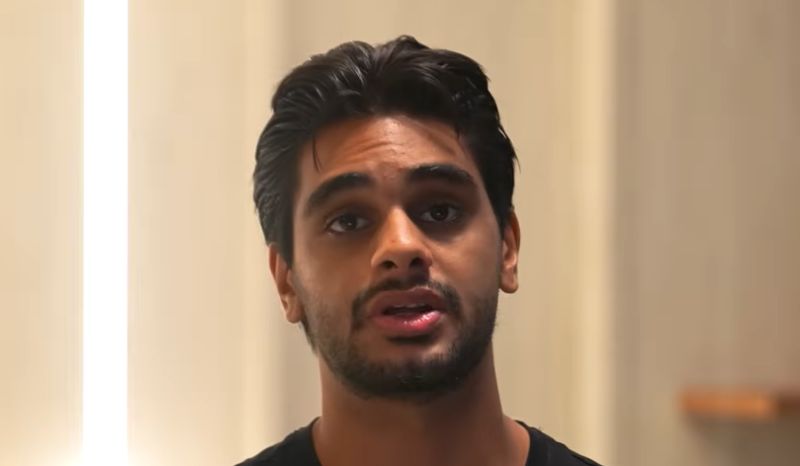
Saamir Mithwani is a dropshipper and coach known for his Brandify program. He has built multiple 7-figure dropshipping brands in the past 5 years. Saamir claims to have a net worth of $30 million. Before dropshipping, he was reselling a variety of items online and doing other side hustles. He then started doing Amazon FBA. In 2021, Saamir started dropshipping under the company name Avantlights. He started teaching in 2024 after founding his first coaching program, Jolt Institute.
What Are Saamir Mithwani’s Claims?
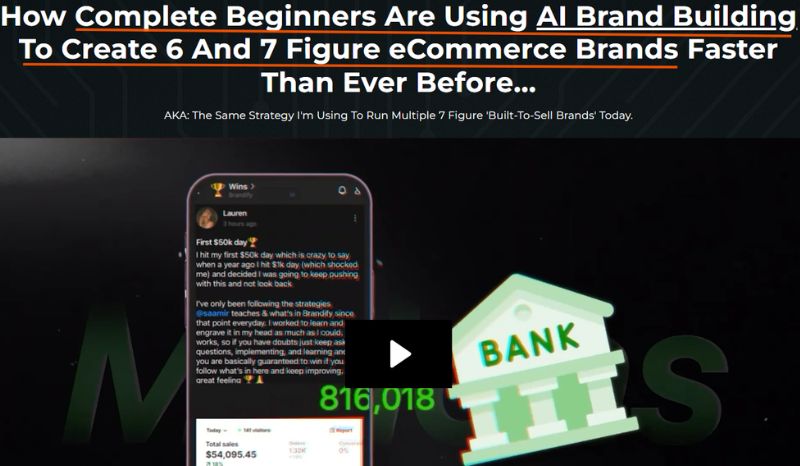
- Saamir claims that beginners can build 6 and 7-figure brands quickly with his AI brand building model.
- He claims that AI gives you better odds and “levels the playing field.”
- He claims that dropshipping is the “best opportunity of the decade.”
Are Saamir’s Claims Realistic?
- Saamir’s claim that beginners can build 6 and 7-figure brands is overoptimistic. Even with the use of AI tools, success in dropshipping is not common. FreightAmigo reports that 80% to 90% of dropshipping stores fail within a year. Shopify says that the average profit margin for dropshipping is 10% to 20%. This does not even consider unforeseen events like refunds and returns.
- Saamir’s claim that AI gives you better odds of success has no basis. He confuses speed with edge. A McKinsey State of AI survey found that 71% of businesses already use AI in their business functions. When the tool is already everywhere, it is no longer a unique advantage. While AI can speed processes, it does not translate directly into accurate market research or effective ads.
- Saamir’s claim that dropshipping is the best opportunity today is unrealistic. Shopify reports that it serves “millions” of merchants. Littledata says the average Shopify store converts at 1.4%. Baymard reports that 70.19% of carts are abandoned. These stats show that dropshipping is a crowded, competitive model, and not a once-in-a-decade opportunity.
What Are Some Brandify Alternatives?
- Jeremy Ray Holst’s Creato - A beginner dropshipping course built around the “1st 10 Orders Framework.” It includes training, community access, weekly group calls, and supplier contacts.
- Grant Ecom’s Dropship University - An AI dropshipping training that teaches students to use AI tools to find winning products and build a boutique-style Shopify brand. It includes a step-by-step training and 1-on-1 calls.
- Nathan Nazareth’s AI Ecom Insiders - An AI dropshipping mentorship built around AutoDS that focuses on faster product research and ad testing. It includes a 90-day mentorship and live Q&A calls.
Final Verdict: Can Brandify Help You Build a Dropshipping Brand Using AI?
Brandify can help you build a dropshipping brand using AI. You will also learn how to run marketing campaigns to promote your products. However, the program can not guarantee profitability. To be a successful brand, you need time to grow your following. This is not easy using AI-generated UGC content, as you will fail to stand out. From finding reliable suppliers to run paid ads, it’s all a gamble. You won’t know if you are getting quality products or launching effective ads until you have already paid for them. This is why dropshipping is risky and costly compared to product-less, organic-traffic centered models like local SEO lead generation.
Is AI Dropshipping More Profitable Than Local SEO Lead Generation?
AI dropshipping is less profitable than local SEO lead generation because of the product, marketing, and brand-building costs. Local SEO lead generation has profit margins of up to 95% because of the low maintenance costs and zero marketing.
In my experience, comparing AI dropshipping to local SEO lead generation is like chasing the YouTube Shorts algorithm versus waiting for an OnStar crash alert. YouTube Shorts requires nonstop output and fresh hooks to gain visibility. That mirrors the marketing grind in AI dropshipping. You constantly need to create and test ads to compete with trends. An OnStar crash alert only goes off when the occupants already need help in an accident. Local SEO lead generation works the same way in that leads come in passively from people already looking for solutions.
Why Local SEO Lead Generation Is the Less Risky and More Profitable Option?
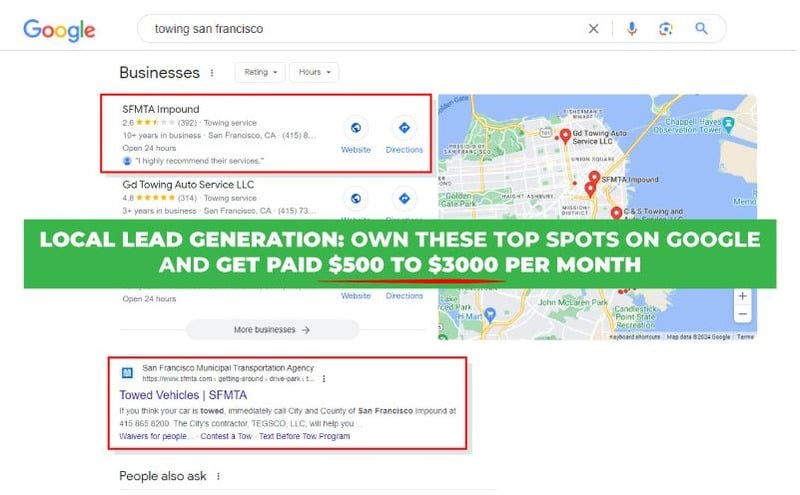
Local SEO lead generation is the less risky and more profitable option because create low-cost assets that you own. You use SEO to rank niche sites that attract free traffic. You then sell these leads to local businesses. You don’t even need to hard sell it since businesses already known the value of high-intent leads. The leads come in passively without you running any marketing campaigns. This keeps the operating costs very low.
A client of mine is Burbank Elite Kitchen & Bathroom Remodeling, 9927 Muirlands Boulevard, Irvine, California 92618, (949) 792-4002, https://www.burbanksuperiorremodeling.com/. In 1 month, I had 14 leads closed for $34,720. I had a 10% commission deal and took home $3,472. I have dozens of sites like this as scaling is as easy as duplicating the process. Check out local SEO lead generation for the less risky and more profitable option to dropshipping.

Follow Me
Ippei Kanehara
Founder/CEO
$52K per month providing lead generation services to small businesses
Ippei.com is for digital hustlers, industry leaders and online business owners.
His #1 online business recommendation in 2024, is to build your own lead generation business.